
Inducible Laryngeal Obstruction (ILO)

ILO is best managed as part of a multi-disciplinary approach
Vocal Health works closely with Respiratory Physicians and Ear, Nose & Throat (ENT) Surgeons to support accurate diagnosis, coordinated management and ongoing rehabilitation.
Inducible Laryngeal Obstruction (ILO) is a condition in which the vocal folds or structures around the voice box temporarily narrow during breathing, making it difficult for air to move into the lungs. Episodes can be sudden and distressing, often causing a sensation of not being able to get enough air.
ILO is sometimes mistaken for asthma because the symptoms can appear similar. However, the problem occurs at the level of the larynx (voice box) rather than within the lungs. Some people have ILO alone, while others have both ILO and asthma.

Assessment of ILO
Assessment focuses on understanding the factors contributing to your breathing symptoms and identifying the triggers that provoke episodes.
This may include:
a detailed history of your symptoms and triggers
assessment of breathing patterns
voice assessment where appropriate
review of relevant medical investigations
collaboration with your treating respiratory physician or ENT specialist
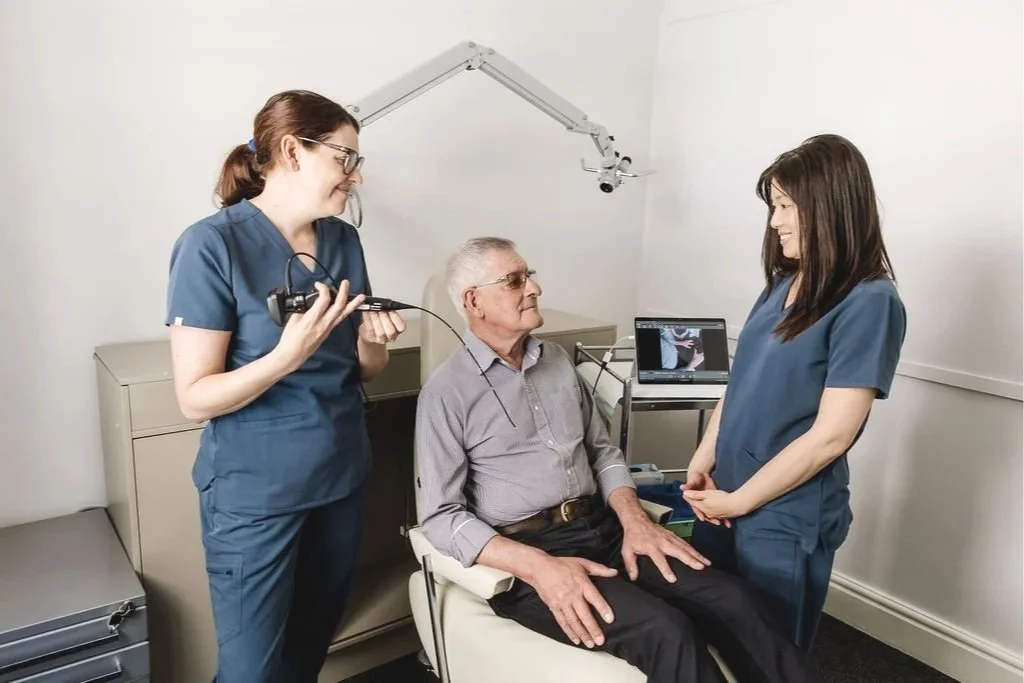
Where clinically indicated and with medical clearance, flexible nasendoscopy may be performed to assess the function of the larynx during breathing and voice tasks.

Treatment of ILO
Behavioural therapy delivered by a speech pathologist is recognised as a key component of management for inducible laryngeal obstruction. Current evidence supports breathing retraining, education and laryngeal airway control techniques to reduce symptoms, improve self-management and help people return to normal daily activities, including exercise.
Rehabilitation is tailored to each individual's presentation and may include:
breathing retraining
reducing laryngeal tension
strategies to manage and prevent episodes
identifying and managing triggers
improving coordination between breathing and the larynx
education about ILO and symptom management
strategies to support exercise and everyday activities
Treatment is individualised and guided by your symptoms, goals and response to therapy.

Real-Time Visual Biofeedback
Flexible nasendoscopy can also be used as a biofeedback tool during rehabilitation.
By viewing the larynx in real time, patients can better understand what is happening during breathing and learn techniques to reduce inappropriate laryngeal closure. This immediate visual feedback can improve awareness, reinforce breathing strategies and support the development of more efficient laryngeal function.